Showing posts with label characters. Show all posts

Friday, May 18, 2012

Book Review: Hero's Guide -- Christopher Healy


Cinderella. Rapunzel. Sleeping Beauty. Snow White. Four massively popular fairy tales, retold time and time again…
                And the Princes Charming always get the short end of the stick.
                In The Hero’s Guide to Saving Your Kingdom, by Christopher Healy, the story begins where the old stories ended – but in an ‘after’ that’s really not so ‘happy’.
                For one reason or another, nothing’s gone as expected for these princes. They find themselves separated from their princesses, each dealing with their individual problems – cowardice, life in the shadow of sixteen mighty brothers, lies spread by a rotten (ex)fiancĂ©, and a sore lack of friends (as a result of general craziness).
                Princes Frederick, Gustav, Liam, and Duncan band together in order to stop an evil witch and save the day. And some hostages. Not to mention their reputations (which are a bit lackluster, thanks to the bards’ failure to fact-check before spreading their stories).
                As someone who loves fairy-tale retellings, I was very excited by the premise of this book.
                And Hero’s Guide exceeded my expectations. It addresses common questions asked by fairy-tale lovers everywhere --“Why didn’t the prince in Rapunzel go get a ladder?” “Why did the prince in Cinderella send a servant to track her down instead of going himself?” “If two people have never even spoken before, can it really be ‘True Love’s’ kiss?”
                The book also crafts deep, connectible characters who develop widely over the course of the book. They’re all so plausible that you wonder why you never imagined them in such a way to begin with. Watching the friendships grow (especially in the case of two certain characters) was wonderful. The princes have very different personalities – each uniquely their own – and yet they fit. Together, they make for a fabulous tale—even if they’re not always sure exactly what’s going on.
                Aside from the characters, there’s the fact that Hero’s Guide is absolutely hilarious. A quirky, fun book that had my inner critic relaxed and laughing from the first page onward.
                The story (and the accompanying artwork) remind me a lot of movies like Tangled, and How to Train Your Dragon. It’s a whole-heartedly fun read. You’ll fall in love with the Princes Prince Gustav characters, and be rooting for them the whole way through.
                I, personally, am very glad that this is only ‘Book 1’, and have placed it prominently upon the family bookshelf so that my younger brother can read it, too. Frankly, I think that’s the highest praise I can give to a book.


Thursday, February 2, 2012

The Imperfections of Perfect

                Writing the following example nearly killed me.

                Francesca swooned inwardly, sneaking quick glances at the unfamiliar boy who’d just entered the room. He was the most gorgeous guy she’d ever seen. Tall, the way she liked, with light tangles of hair and a gentle smile. He was perfect.

                Gag.

                I’ll be honest. When I come across descriptions like this in books, my immediate reaction is to dislike the guy in question whole-heartedly, with much snorting and eye-rolling. It’s a rebellious impulse, brought forth by a couple of basic words.

                Perfect. Gorgeous. Beautiful.

                It feels like someone’s trying to set their friend up with a guy. “He’s GREAT, I swear, just GREAT. He’s SO hot, I promise, you’ll love him.” He’ll never live up to the expectation. Even if he is hot, there’s gotta be something wrong with him. Prison records, psychotic tendencies, or maybe even despicable table manners. The blind date’s instigator just tries to cover up those little details by putting the emphasis on how ‘Hot’ he is.

                You’ll have a hard time getting me to like your MC’s love interest if you use those phrases the first time you describe them -- especially if it’s the first time your MC even meets their love interest (unless of course your MC is the kind of person who would immediately notice and/or comment on things like this, regardless of whether they want to date the guy).

                Why am I so opposed to Perfect?

                Too Unrelatable – How many Perfect people do you know? How many really and truly Perfect people do you think there are in the world? Speaking for myself, I am far from perfect. Chances are, so is the character in question. Calling them Perfect is just setting up for disappointment from the reader, or even irritation toward the MC if the main character fails to notice the love interest’s imperfections, and goes on falsely believing that they truly are Perfect. Having the love interest deny their Perfection doesn’t help; false modesty can be really, really annoying.

                Too Vague – You call a guy character perfect. Great. But what is he like? Everyone has a slightly different view of what Perfect is, and when the author/character’s viewpoint clashes with the reader’s, it could make for a conflicting first impression. For example, if a reader likes her male characters wiry or a little lanky with short hair, that might be the first image in their head when they read ‘Perfect’, even though the author was talking about a big, macho muscle-man with hair down to his shoulders. And if you add a few clarifying details in the same general paragraph, then… Why do you need to use the word Perfect in the first place? Which brings us to the third point:

                Too Easy – Show versus Tell is one of the most common issues that pops up in conversations between writers, and those flat adjectives (Perfect, Gorgeous, etc.) are Telling. They are overused to the point where Perfect is not perfect, at least in terms of description. Let the reader infer the character’s attractiveness, please! I would much rather decide (and see the MC decide) that a character’s hot based on his specific physical attributes than on an empty word like ‘Perfect’. Better yet, make the cute nose and the toned muscles an afterthought, and let us fall in love with the things he does. The way he treats his girly-friend. The way he treats people in authority, and people in opposition to him. The way he faces challenges. All of his actions and reactions, blending together into a guy that is pretty darn attractive. Doesn’t developing an impression that way sound deeper and more satisfying than a simple “He’s hot”?

                Like I said, my first impulse is to despise Perfect characters on sight. The author will have a steep slope ahead to win my affections after pouring on some over-flattering descriptions.

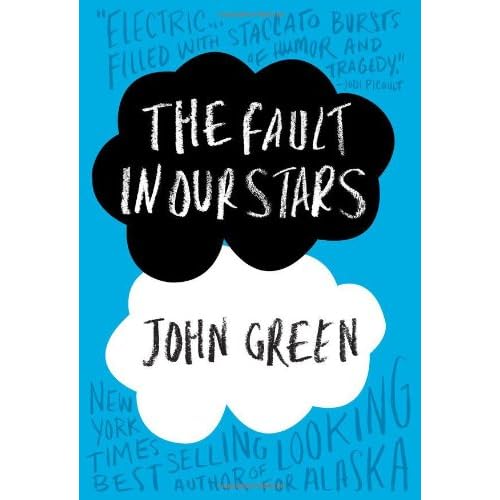
                That said, it is not impossible. Augustus Waters, from John Green’s The Fault In Our Stars is a fabulous example. A few paragraphs after meeting this character, Hazel blatantly calls him hot. I’ll confess, there were about three milliseconds where I thought “I am not going to like this character.” I was wrong. I loved him by the end of the book. I think the turn-around was partially because A) it was not the first little bit of description I had about him, and B) His hotness did not greatly affect how Hazel treated him. Although she had a “Crap, I forgot to brush my hair” moment, that did not stop her from turning an awkward situation into a staring contest, or from spouting a philosophical monologue about Oblivion. His hotness was a thing, but it was not the only thing.

                However, I think Augustus is an exception to my general rule. It’s not something I can help; it is automatic. After seeing these basic words used over and over again, they have become shorthand for “Another of these characters. Roll your eyes here. Watch out for possible shallow character interactions to come.”

                I do not have an aversion to hot characters. I’ve had my fair share of fictional-character crushes.

                But let me decide for myself why to like a character.

                A bit of subtlety is perfectly reasonable, I assure you.

                What pet peeves like this do you have? Do you share my rebellious anti-“Perfect” reaction? What characters have you crushed on over the years, and why?

Thursday, January 26, 2012

In Which Praise of The Fault in Our Stars is Inadequate


Approximately three minutes ago, I finished reading The Fault in Our Stars.
Twitter is waiting, full of messages from the outside world that came in while I was busy at school, along with Email and Facebook and all the other Things. But those Things will wait until I’m done writing this review, because I do not want to shatter the moment. I do not want to break this pleasant daze that’s fallen over me. After a few brief moments of staring at the unread books on my bookcase, I realized that I didn’t want to start reading any of them, because I know that none shall live up to the story that John Green has crafted.
The Fault in Our Stars is one of the best books I have ever read. And it is not a book that I can read in public.
Or at the very least, it is not a book that I should read in public. Because from the very start – those first few pages, so grand, and good, and so very John Green – I could not keep a goonish grin from spreading across my face. In the middle of school, I turned red as I half-attempted to stifle the grins, the giggling, the uncontrollable joy.
I’m sure it was very distracting for my fellow classmates.
And then, today, as I reached the heart-breaking, tragically beautiful ending, I encountered a similar problem. I knew from the start that the book would be sad. It involves cancer. I was tweeted a picture of tearstains on some of the pages. I seldom cry while reading books. But if there is any book that could bring tears to my eyes, The Fault in Our Stars is it.
And I’m sure uncontrollable sobbing would be just as distracting as uncontrollable grinning, if not more so.
Those first so-very-John-Green pages were amazing. But even better were the later chapters, when I looked up from the infinities within the book and realized that I’d stopped hearing John Green’s voice in my head. All I heard was Hazel.
After a time, Hazel and Augustus ceased being creations of John Green. They were Hazel and Augustus. And Hazel was telling her story, and Augustus was being Augustus, and as they bantered between their tragedies, they became real. Their humorous, heart-warming, heart-breaking story became real.
It is nearly impossible to adequately describe this book; I learned that shortly after I tried to explain to my classmates how a book about cancer could have me stifling laughter. All I can say is that this book is truly unique, and truly phenomenal. John Green did his work well. And Hazel and Augustus have settled into my mind, to remain for the rest of my days, even after this pleasant daze shatters.
I leave you with a quote from Augustus Waters.
“…it’s easy enough to win over people you meet. But getting strangers to love you… now, that’s the trick.”
Mission accomplished, Augustus.
Thanks, John.


*The first two chapters of The Fault in Our Stars are available to read on Amazon.com, and there are also videos of John Green reading the first two chapters aloud on Youtube. Also, in case you somehow failed to hear this, EVERY COPY OF THE FIRST PRINTING IS SIGNED. If you buy a copy, it will be autographed by John Green.*

Saturday, October 8, 2011

First Impressions: How to Introduce Gripping Characters

Today's post about introducing characters that will grip a reader is located on the new collaborative blog I'm contributing to:

 Scratchlings!

Short version is, we can get readers to care about our characters by giving them humorous, heroic, and relatable traits. We want to get deep inside their heads.

For a more in-depth explanation, click the link.

And guys? It involves a video of Captain Jack Sparrow.

:)

Saturday, October 1, 2011

Lack of a Reaction: When Questions Go Unanswered

**Scroll down for an important exciting announcement! 8D**

Now, on to the post:

Supernatural Boy: “I don’t have much time to explain, but long story short, you’ve just been sucked into another dimension and are actually our long-lost princess. You’ll also develop astonishing powers you’ve never even hinted at possessing before in about fifteen seconds, after we’re attacked by the witch trying to steal your throne.”

                Female Main Character: “Okay. Let’s do this.”

                See any problems here?

                Yes, there are a few, but the one I’m going to focus on is our FMC’s reaction to the news that her life has just gotten a whole lot more complicated.

                Specifically, I’m going to focus on her lack of reaction. There’s no frantic questions, no denial, no burst of laughter, and no sarcastic comments regarding the sudden need for an insane asylum… She just accepts it. And the story moves on. And any questions the reader has – which, by the way, should be more or less the same questions this MC would have – are completely and totally ignored.

                We do not want to ignore our reader, folks. Not once you start preparing your book for others to read. We have the answers all in our heads. Our readers, and often our characters do not.

                A show I rather like kind of inspired this post, because I see the writers ignoring readers’ questions on a regular basis. Granted, there’s only so much you can fit in a 30-minute episode, but isn’t that what cliff-hangers are for?

                Take for example one episode in particular. Up until that episode, our MC was an amnesiac, and his whole ‘thing’ was trying to find out his past, where he’d come from, why he had the abilities he did…

                And then suddenly, in this episode, his long-lost brother appears! His bro should have all the answers! He can finally clue the readers in on what’s going on! Finally, things will start to make sense!

                Except they didn’t. Partially because his long-lost brother is a quirky, crazy guy, a bit out of touch with reality, but mostly because our main character didn’t even bother to ask the questions in the first place. This is his chance to find out everything, and he doesn’t seem that concerned about it. There wasn’t a single question about his past, or his life before amnesia. At the start of the next episode, it was like his brother had always been around. Still no answered questions.

                Which left me, the viewer, wondering two things.

o   What is he waiting for? This is his chance, so why isn’t he taking it?

o   Now that he potentially has all the answers… Where are they taking this character, and this plot, and this series?

                It also made me start to think, “Is this show really as fantastic as I thought at first?”

                And this is not something we want our readers to be thinking about our books.

                Like I said, there’s only so much the writers of that show could fit into one episode. Similarly, there’s only so much we can fit into a novel, or a chapter, or a scene. If our characters are right in the middle of a chaotic battle, they’re not going to have time to sit down and talk things out right away.

                But that shouldn’t stop the questions from eating away at our main character. It shouldn’t stop them from asking those questions at the earliest opportunity, and it shouldn’t stop them from demanding answers. It shouldn’t keep our characters removed from all the emotion they should be feeling after a major development…

                Because if the emotions and questions in our reader’s mind keep prying them away from our character’s thoughts, things won’t match up. Our reader will feel disconnected, and frustrated, and they might even feel like closing the book entirely.

                The show I’m referring to, I think, has been trying very hard to keep things light. Comedic. ‘Fun’. Which is good, I suppose, except I feel like they’re sacrificing all the messy, emotional meat of the character reactions that I love. The questions are still roaring through my head, episodes later, as a new huge event was just brushed over with little fanfare. The long-lost brother is still there, but I’m no longer sure why he matters, or if he matters, or if our main character’s history was ever really important (even though that was the whole starting premise of the show).

                I’m not matching up with the characters. They, and the plot of the show, don’t feel as real to me as they once did.

                And if your characters or plot don’t feel real… Then it’s just a show. Or just a book.

                I can turn off a show. I can close a book.

                Appropriate reactions aren’t just a matter of scenes and chapters. They’re a matter of keeping your characters believable. And they’re a matter of making your story more than ‘just’ a book.

                Have you ever read a book or watched a show that skimmed over extremely important events? Have your characters ever inexplicably accepted something impossible? What do you think the balance is between addressing questions, and getting overloaded with them?
And perhaps a better question, have you figured out yet that I get really excited about Character Reactions?
Now...

Announcement Time! 8D

I'm proud to announce that I shall henceforth be contributing to a new collaborative writing blog, begun by myself and three amazing friends from Young Writers Society.

Scratchlings is now officially in business.

Feel free to check it out. :)

Wednesday, September 21, 2011

Conversing with Characters

“I don't know who my characters are anymore. They used to be so alive for me…I would speak to them all the time, and I would swear I hear their answers…Now… My characters don't speak to me anymore. I don't know who they are. Don't know what they want, and I don't know how to get that spark back.”

                So said my friend Tanya in this blogpost a few days ago. I posted a brief comment there, but since it was something I’d been thinking about a lot myself recently, I decided to share a more thorough explanation with all you fine people.

                You’re writing a story, and it’s coming along steadily. Not good, but not bad either.

                Then it happens. A flash of inspiration. Words that are not your own. And your character blurts out something so uniquely them that your fingers stall on the keys; you’re astounded by your own genius.

                It’s a good feeling. Bad news is, these moments can be few and far in-between. And once you get a taste of it, you’ll never stop yearning for those words that surface all on their own.

                So how do we reclaim some of this feeling when we’re struggling to understand our characters? Well… Girls, any ideas?

                Viss: The answer’s simple enough. Talk to us.

                Ambria: Indeed. How would you expect us to cooperate with your plans if you don’t even take the time to understand our position?

                Shaysha: Yeah. I mean, I keep telling ya’. I’m not stupid enough to risk my life for Brihn, even if I do lo-- … o///o

                Corliss: Oooooh… XD *insane little chuckle* Someone’s got a secret. I’m good with those. Just ask Tristan. Or her little rebel friend in the stables. Kept his secret for a long time. ^^

                Starting to see what I mean? Viss is very straight-forward, and a bit superior. Ambria is very proper. Shaysha uses a more casual tone, and Corliss… Well, Corliss is just plain crazy. :) (And I love her for it. Her backstory is going to be my NaNoWriMo novel this year). Four characters from four very different novels. Each with their own way of responding to a situation.

                Start a conversation with your characters. It doesn’t have to be a scene from your book. It can be a conversation about anything. Talk about your day. Don’t just listen. Talk back.

                I’ve been trying this method myself, recently, so here’s some bits and pieces of my conversation with a character from one of the short stories I’ve been polishing. I set it up like a chat, just like you’d have with anyone online. Comments in green.

                Silent_pages: Hi

                StickyFingers79: Greetings, internet person. What’s up with you? [Just coming up with a username for your characters can be interesting. Even if they live in a world without internet access, try to think about what they would choose for their name if they did.]

                SP: Nothing much. Got a novel I’m working on and some other stuff. You?

                SF: You a writer? That’s cool. As for me… I guess the same thing that’s ‘up’ with everybody else.

                SP: The star thing? Yeah, lol, I guess. I write scifi, so it’s weird to be… You know. Living it.

                SF: LOL

                SP: You can laugh about it? Not many people can. [Lead the conversation. You can put in things about yourself, to keep the atmosphere normal, but also ask a lot of questions, like you’re trying to get them to think about stuff. Because that will make you think about stuff.]

                SF: Ah… Yeah. Well. What else can I do?

[The conversation went on, just like any other chat, and I found out more about this character’s sense of humor, her mom, her tendencies to skip school.  But the real fun began when I added a character from a fantasy short story.]

                SwimmerseyesOO: Hey, what’s up?

                SP: NM. U?

                SF: World Ending. U?

                SE8: Creature taking over my village. Idiots.

                SP: What kind of creature?

                SE8: The kind that’ll be dead soon if it don’t knock it off.

                SF: Lol. Go after the star-killer next.

                SE8: Sure, if I can find it, lol. I have bad eyes.

                SF: No prob, no prob. Our scientists can’t find it either. *facepalm*

                [LATER, the conversation turned deeper.]

                SF: I don’t need help. I feel fine the way I am. I like stealing. I’m good at it. But people don’t get that. My mom thinks I need to be ‘fixed’.

                SE8: At least there are people who would actually try to fix you. Peeps in my village were clueless even before the creature’s spell took hold. I mean, I’ve always kind of been on the edge. Like, I’m blind. What are they supposed to do with me? What am I going to do for a job someday? That’s why I like to swim. You don’t really need to see for that.

                [END OF SELECTION]

                See how little I had to prompt the conversation toward the end? All of a sudden, these characters from very different scenarios were turning into best friends. They continued to talk, getting to know each other, discussing school, their communities, the way they feel about everything under the sun.

                Will everything be incorporated into your story? Probably not. But all that information will be in your head, shaping their every action.

                Will it always be easy, figuring out how your character will respond to a certain situation? Probably not. But this exercise might help you to pin down parts of a certain character that you never noticed before.

                Will you always be able to make them sound the way they would in-story? Probably not. Even in the above bits, you can see that I slipped into more modern speech for SwimmerseyesOO. But it’ll get you thinking. How would this character say this? Why doesn’t this figure of speech work for them? What can I use in place of this word?

                Maybe it’s hard to understand from reading all the little pieces of my conversation. But that’s the beauty of it. Start a conversation that only you will understand in its entirety. Let the characters talk, and see what comes to the surface.

                Do you talk with your characters? On a regular basis? On paper, so you can remember the conversation later? Have characters from different stories begun to converse out of the blue? And how did it help you get to know your characters?

EDIT: Also, feel free to introduce your characters in the comments. Also, if you'd like to hear more from my characters, I share a tumblr with them at http://thesilentpages.tumblr.com/
               

Friday, September 16, 2011

Our Story is Not About Us

Apologies. A bit scattered today. Application for writers is a bit down the post, so bear with me.

Yesterday, the wonderful Nate Caldwell – creator of the wonderful young writers’ site I love – announced he would no longer be managing Young Writers Society. He’ll still pay the bills, the site will still be there, and he’s trained the mods to run the site smoothly in his absence.

                Young Writers Society will stay active. Nate will not.

                And while I understand his reasons, it was still like a thud to the chest. He’s leaving? So suddenly? Was it something I did? Has my presence somehow made the site unpleasant to be around? Maybe if I’d bought more YWS Literary Journals, or called in on the radio shows, or… or… or…

                As I said, I understand his reasons. I’m not going to chain him to the site for the rest of eternity, and if he feels that it’s time for him to move on… I understand. I’ll definitely be keeping an eye on his next project, Writer Feed, and I’m not going to stop going to YWS. Neither will many others who won’t let the site slip away without a fight. Neither will many new members who haven’t even joined yet.

                I think the whole site is a bit stunned at the moment, trying to figure out what will happen next… But hopefully, the answer is “Something.” Or, “Everything.”

                I’ll keep logging on. So will hundreds of other young writers who’ve found a supportive community on YWS where things aren’t just, “READ MY STORY NAO AND I’LL FAVE YOURS SO IT LOOKS LIKE I RETURNED THE READ, OKAY? LOLOLOL.”

                Young Writers Society is probably the best young writers’ site I’ve ever been on, and that’s thanks to all the work Nate has put into it. We. Will. Miss him. But we’ll keep logging on.

                *sigh*

                So, in relation to writing:
 Nate’s announcement made me think of our stories. The ones that never get off the ground, and the ones that just keep circling above a busy airfield, waiting for us to help them make a landing.

                We writers hit a block. We move on to the next Shiny New Idea, telling ourselves we’ll return eventually. And sometimes, we just get distracted, or busy, or tired of this story that takes so much out of us and doesn’t seem like it’s ever going to give anything back.

                How often do those stories get the courtesy of an explanation why?

                They sit at the bottom of a fictional landfill, lost in the depths of a drawer or a computer hard drive, waiting. Our writer left us? Was it something we did? Should I have started more grippingly? Were my characters that unsalvageable? Should I have skipped the giant squid attack and gone straight to the swirling whirlwinds of death?

                Except maybe, they don’t think like that. Maybe the crinkled, ink-stained papers or the endless pages of a Word Document ask themselves those questions, but I think our characters just… go on living. They pick up their palaces and spaceships, their heroes and their villains, their plot twists and climaxes and their clunky dialogue, and they make the migration to the back of our skulls.

                They settle down, and they go on with their story. To be honest, they’re grateful for the time they can spend practicing without the evil red pen of the author bearing down on them. They get more comfortable with each other. They spend their sudden abundance of free time exploring the twists and turns that resulted from the chaos of their hurried move. They take a turn that we never would’ve picked out. They polish up their personalities. They watch from afar as we torture our latest stories and laugh about how easy they really had it, back in the old days.

                Then, maybe at some point, Moving Day arrives. They pack up their things and move back into their old station at the forefront of our thoughts, except this time they’ve got some ideas of their own to run past us.

                Their stories aren’t about us. They don’t care about making it easy for us, or about making it hard. They have their story. And even though we talk about target audiences and things like that, maybe deep down we’re really just figuring out the story they lived through when they were killing time in the back of our minds.

                Even when we don’t think of a story for months at a time, that doesn’t necessarily mean their story is dead. Even if some things get lost in the moves, certain things – characters, scraps of dialogue, pieces of description – will keep living. Just like young writers at YWS will keep logging on.

                At YWS, we’ll miss Nate. Just like our characters might miss us (or at least miss their extended time on the computer screen).

                But we’ll keep going, and we’ll figure things out for ourselves, just like our characters will figure things out for themselves whenever we need a break.

                How many of your stories have ‘died’? Have any resurrected themselves, bigger and better than before? Are you on any amazing websites for writers, or is there a single person/organization/etc. that's had a huge impact on your writing?

Wednesday, August 31, 2011

A Character's Class Schedule: Detention

Detention: Characters Who Break the Rules
A few weeks ago, I wrote a post about how authors break the rules in writing. Then more recently, I stumbled onto this blog post at Wicked Tricksy that talks about the same thing (in a much more intelligent way than I did. XD).

It’s fairly common knowledge that writers break the rules all the time, but in this last segment of a Character’s Class Schedule, I want to talk about characters who break the rules.

To my way of thinking, there are three main types of rule-breaking characters.

Characters who break good rules for good reasons: They sneak out after curfew, drive without licenses, disobey their parents/guardians/mentors, but they’re not really bad kids. Circumstances drive them to break the rules – to lie, steal, and disobey – all for the greater good.

After all, it’s not their fault that the evil ceremony can only be stopped at midnight, and it happens to be taking place miles away. And even though their fearless protector told them he’d be ‘fine’ on his own, we all know he’s going to get captured and tortured unless our little rule-breakers step in.

And then we have our innocent men and women, framed for crimes they didn’t commit. If they’re ever going to clear their name, they’ll have to run from the police.

The character Benjamin Gates in the movie National Treasure once said, “The only way to protect the Declaration [of Independence] is to steal it.”

Sometimes, impossible situations like that arise, and there’s no alternative but to break the rules. It all comes back to that choice between the Action and the Unthinkable (like I talked about here ).

These characters aren’t bad people, but they have no other options. They either act, or they die, period. The legality of those actions is insignificant.*

*in fiction, people. In real life, the legality of actions is very, very important. XD

Characters who break any rule, usually for bad reasons: Often these characters play the role of an antagonist, but there’s also a fair share of them on the side of the hero (or who are the hero). Note that these characters don’t have to be the embodiment of evil. This category can also be broken up into two subdivisions.

First, we have our Captain Jack Sparrows. Our Ferris Buellers. These often frivolous, charismatic, and street-wise mischief-makers might be scraping out a life going from stolen meal to stolen meal, or they might just be shirking their responsibilities. Whatever the case, their tendency to break rules stems mostly from the fact that they just don’t care, or the rules don’t make sense to them. They think they have a better way, or that the rules just don’t apply to them.

Then we have the darker side of the spectrum. Our super villains. Our Jokers. Our Voldemorts. They break the rules without a second thought, or even go out of their way to break the rules. They reject societal standards, and they’re willing to do anything to get what they want. Legality has nothing to do with it. Sometimes, these characters are the embodiment of evil. At the very least, they’ll feel like the embodiment of evil to our main characters.

Unless of course they are our main characters. >:)

Characters who break bad rules, for good reasons: Chances are, these are some of the first characters you thought of, especially with all the examples that are honored in today’s world. I’m not just talking about Katniss, from The Hunger Games, although she is a good example.

Just think of our history. People who dared to hide Jews from the Nazis. People who dared to guide escaped slaves to freedom. People who dared to sign the Declaration of Independence.

To quote the character Ben Gates once more – “To high treason. That's what these men were committing when they signed the Declaration. Had we lost the war, they would have been hanged, beheaded, drawn and quartered, and-Oh! Oh, my personal favorite-and had their entrails cut out and burned! … So, here’s to the men who did what was wrong, in order to do what they knew was right.”

These are the characters who dare. The ones who will oppose the wrong rules to their dying breath, even if doing so means that last breath might come sooner.

They’re the martyrs. The revolutionaries. The heroes that will grow into legends and find their way into the history books.

Three categories. Lots of examples. Lots of characters for us to become involved with.

Think about your characters. Which category would they fit into? Do they follow the government and society’s rules, or make their own? Would they ever break their own rules?

Your (optional) homework assignment: Make a list of rules for your writing. They could be your generic “Don’t kill, steal, etc.” or they could be rules unique to your world, or your characters. They could be unspoken societal norms, like “Don’t mention the kings that came before this one.” Whatever you want. Just make a list. Then think about which of your characters would break those rules, and what the legal/social consequences would be if they broke those rules.

Did I miss a category? Or an example that’s especially representative or one of the rule-breaking classes?

And with this, class is dismissed. :) Thanks for reading. More posts coming soon.

Sunday, August 21, 2011

A Character's Class Schedule: History

History: Background Information
Think of a book that takes place in a different kind of world. Far-off fantasy lands, or far-off futures. Chronicles of Narnia or Hunger Games. Pretty much any dystopian novel you’ve ever read. Any fictional world that’s very different from our own.
Now what made them turn into such a different world?
What brought two countries to the brink of war? What events turned the world into a post-apocalyptic wasteland? Where did the Creature of Ultimate Darkness come from?
Most novels at least touch on the answers to questions like these. Some devote a whole book to the subject. (Want to know how the world of Narnia came to be? Just read The Magician’s Nephew!)
There are stories that played out before Chapter 1, nestled someplace between the front cover and the first sentence. Stories that shaped the world into a perfect setting for the rest of the story. The author can’t always go into these histories, but that doesn’t mean they aren’t present.
A word here. A sentence there. A battered old memorial in the square of a city called War-torn. All of these things and more can allude to the stories that came before, and show the reader those reasons that rest below the surface.
Cliché Example Time: Elves and Dwarves hate each other.
Why?
Long ago, elves tired of the dwarves chopping down forests to get the lumber they needed for tunnel supports and tool handles. The elves stole all the dwarves’ equipment (along with a wealth of jewels and precious metals that the dwarves kinda want back) and began to guard the forests.
To get revenge, the dwarves stormed the forests and burned them down out of spite. Then the elves collapsed the dwarves’ tunnels. With that, the two races launched into generations of retaliation, hatred, and revenge.
But in our story, all the readers need to know is that they hate each other and believe they have legitimate reasons for hating each other (nothing should be pointless, kiddies).
We can get this across simply by using the following:
In an argument, a dwarf calls an elf a greedy, selfish, wood-hoarder.
In retaliation, the elf calls the dwarf a murderous forest-torcher.
The argument comes to a peak when the dwarf demands the return of the Ancient Stolen Jewels of Power.
With just three lines of dialogue, we already start to get the impression that there’s been an extensive, continuing conflict between these two races. We did it more or less without infodumping, and it gives the reader a better reason for these prejudices than “Uh, um… Because I said so” or “Because I need it for my plot to work.”
How does this relate to characters?
Sometimes they need to learn their history, too, just as much as the reader. Many fictional characters have rather unorthodox educations, if they have any at all. Some have led pretty sheltered lives, some may be familiar with certain aspects of history but not everything, and some perhaps just didn’t care enough to learn.
Does everyone in our world know of the events that led up to the American Revolution? Does everyone know how the American Revolution effected governments in countries around the world, like France? (Vlogbrothers provides a handy explanation of the French Revolution. :) )
Whether you’re discussing the real world or a fictional world, events in the past shape events in the present, which is why it’s so important to remember the past. Not to mention the whole idea of history repeating itself.
A layered history can add so much depth to a story, and to a world, and to a character. I mean, hello, Darth Vader and Gollum, anybody?
It can even add to a character’s motivations. Which character is more likely to fight for her people? An elf who hates dwarves  ‘because she’s supposed to’? Or an elf who hates dwarves because she knows how much injustice and death and cruelty there’s been in the past?
And, just another little hint: If your main character’s motivations are strong, that might help your reader’s motivations to keep reading.
Homework Assignment: Think about the world (or character) of your novel and think about how it got the way it is at the time of your story. Then write a summary/short story/ballad/whatever about that history. :)
This concludes our first lesson in a Character’s Class Schedule. What did you think? Good, bad? Helpful or not? I welcome your feedback as I try to work out my blogging style. XD I’m also still looking for suggestions of other classes that characters seem to take often, or any other subjects you’d like me to cover during this series.
I also welcome your feedback on how I should schedule this kind of thing. I’m posting this a day after the announcement because the announcement wasn’t exactly a blog post, but what kind of interval should there be between the other three? Every other day? Two days in-between? Any suggestions you have there would be more than welcome. :)
Thanks for reading! ^^


Saturday, August 20, 2011

Back to School: A Character's Class Schedule. (Mini-series!)

     This past Tuesday, I went back to school.

     *groan*

     Math, science, and – horror of horrors! – gym class. Oddly enough, these aren’t the kind of things that fictional characters learn. Even in books that take place largely in a school setting, most of the information they’re ‘learning’ about is skimmed over quickly, if at all (except for maybe at schools like Hogwarts or the Gallagher Academy…).

      That’s not to say characters don’t learn, though. They tend to have their own kind of classes. Specialized classes, much more interesting than anything I see from school day to school day.

      And so, in the spirit of the season, this post is the introduction to a short series of posts following the theme of ‘Back to School’.

A Character’s Class Schedule

History: Background Information

Happiness Appreciation: Enjoying the Little Things

Physical Education: Action & Movement

Detention: Characters Who Break the Rules

      Considering my tendency to ramble, I’m thinking that dividing things up this way will help me to keep the posts shorter. So that this theme isn’t spread out across five weeks, I’ll be posting these smaller updates at somewhat shorter intervals, across a couple days instead of a week. ^^ Chances are, I’ll go back to Saturday updates after this series is over (and I might end it with another longer post on character development).

      For now, to tide you over, a mini-list of some Extracurricular Activities that fictional characters do tend to study:

    Sword Fighting, Archery, Combat, etc. – Whether they’ve been training their whole lives or pick up a sword for the first time on Page 1, lots of characters need to learn how to fight. One of my pet peeves is when they master this in a day, and are inexplicably able to beat people who’ve been studying their whole lives. I don't care if they're the Chosen One. It's a bit unrealistic, and a bit cliche (It's different if they have some backstory to support their expertise, as explained earlier in this post on Staying in Character).

     Magic – Similar to the above. How many times have we seen characters struggling to master their magical abilities? It’s one of those oft-used plots/subplots that sometimes falls flat, but when done well can feel as fresh as the morning breeze.

     Student Council – Leadership and authority, taking charge of a diverse crowd, and let’s not forget the wonder of one of my favorite subjects: Diplomacy! Politics can be tricky, and any character - from a Crown Prince in line for the throne to a Peasant-Turned-Princess caught up in a Cinderella Story - could use some time learning about social graces.

     And, inspired by another blog post I read a while back that I neglected to get the link to (DX Fail) here are some enjoyable books that take place in a school setting. ^^

     Harry Potter, by J.K. Rowling – Do I even need to give a summary?

     Gallagher Girls, by Ally Carter – Private school for girls who are training to become spies? :)

     Looking For Alaska, by the hilarious John Green – I have not read this yet. But after seeing John’s vlogbrothers videos, I plan to.

     Um, lots of others. XD Most YA books at least touch on school, or learning. It’s part of being a teen, after all.

Any other ‘School’ books come to mind? Any other subjects that you see characters learning regularly throughout their novels? Any that you’d like me to add to the queue? What do you think of this series of blog posts, and the length/interval situation? I’m still kind of finding my blogging style, so any feedback is welcome. :)

Thanks! ^^