Francesca swooned inwardly, sneaking quick glances at the unfamiliar boy who’d just entered the room. He was the most gorgeous guy she’d ever seen. Tall, the way she liked, with light tangles of hair and a gentle smile. He was perfect.
Gag.
I’ll be honest. When I come across descriptions like this in books, my immediate reaction is to dislike the guy in question whole-heartedly, with much snorting and eye-rolling. It’s a rebellious impulse, brought forth by a couple of basic words.
Perfect. Gorgeous. Beautiful.
It feels like someone’s trying to set their friend up with a guy. “He’s GREAT, I swear, just GREAT. He’s SO hot, I promise, you’ll love him.” He’ll never live up to the expectation. Even if he is hot, there’s gotta be something wrong with him. Prison records, psychotic tendencies, or maybe even despicable table manners. The blind date’s instigator just tries to cover up those little details by putting the emphasis on how ‘Hot’ he is.
You’ll have a hard time getting me to like your MC’s love interest if you use those phrases the first time you describe them -- especially if it’s the first time your MC even meets their love interest (unless of course your MC is the kind of person who would immediately notice and/or comment on things like this, regardless of whether they want to date the guy).
Why am I so opposed to Perfect?
Too Unrelatable – How many Perfect people do you know? How many really and truly Perfect people do you think there are in the world? Speaking for myself, I am far from perfect. Chances are, so is the character in question. Calling them Perfect is just setting up for disappointment from the reader, or even irritation toward the MC if the main character fails to notice the love interest’s imperfections, and goes on falsely believing that they truly are Perfect. Having the love interest deny their Perfection doesn’t help; false modesty can be really, really annoying.
Too Vague – You call a guy character perfect. Great. But what is he like? Everyone has a slightly different view of what Perfect is, and when the author/character’s viewpoint clashes with the reader’s, it could make for a conflicting first impression. For example, if a reader likes her male characters wiry or a little lanky with short hair, that might be the first image in their head when they read ‘Perfect’, even though the author was talking about a big, macho muscle-man with hair down to his shoulders. And if you add a few clarifying details in the same general paragraph, then… Why do you need to use the word Perfect in the first place? Which brings us to the third point:
Too Easy – Show versus Tell is one of the most common issues that pops up in conversations between writers, and those flat adjectives (Perfect, Gorgeous, etc.) are Telling. They are overused to the point where Perfect is not perfect, at least in terms of description. Let the reader infer the character’s attractiveness, please! I would much rather decide (and see the MC decide) that a character’s hot based on his specific physical attributes than on an empty word like ‘Perfect’. Better yet, make the cute nose and the toned muscles an afterthought, and let us fall in love with the things he does. The way he treats his girly-friend. The way he treats people in authority, and people in opposition to him. The way he faces challenges. All of his actions and reactions, blending together into a guy that is pretty darn attractive. Doesn’t developing an impression that way sound deeper and more satisfying than a simple “He’s hot”?
Like I said, my first impulse is to despise Perfect characters on sight. The author will have a steep slope ahead to win my affections after pouring on some over-flattering descriptions.
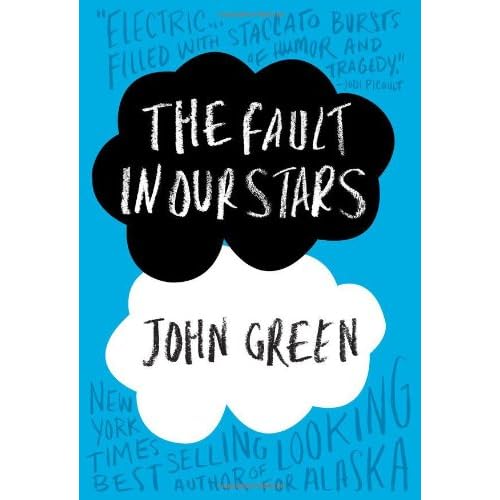
That said, it is not impossible. Augustus Waters, from John Green’s The Fault In Our Stars is a fabulous example. A few paragraphs after meeting this character, Hazel blatantly calls him hot. I’ll confess, there were about three milliseconds where I thought “I am not going to like this character.” I was wrong. I loved him by the end of the book. I think the turn-around was partially because A) it was not the first little bit of description I had about him, and B) His hotness did not greatly affect how Hazel treated him. Although she had a “Crap, I forgot to brush my hair” moment, that did not stop her from turning an awkward situation into a staring contest, or from spouting a philosophical monologue about Oblivion. His hotness was a thing, but it was not the only thing.
However, I think Augustus is an exception to my general rule. It’s not something I can help; it is automatic. After seeing these basic words used over and over again, they have become shorthand for “Another of these characters. Roll your eyes here. Watch out for possible shallow character interactions to come.”
I do not have an aversion to hot characters. I’ve had my fair share of fictional-character crushes.
But let me decide for myself why to like a character.
A bit of subtlety is perfectly reasonable, I assure you.
What pet peeves like this do you have? Do you share my rebellious anti-“Perfect” reaction? What characters have you crushed on over the years, and why?